
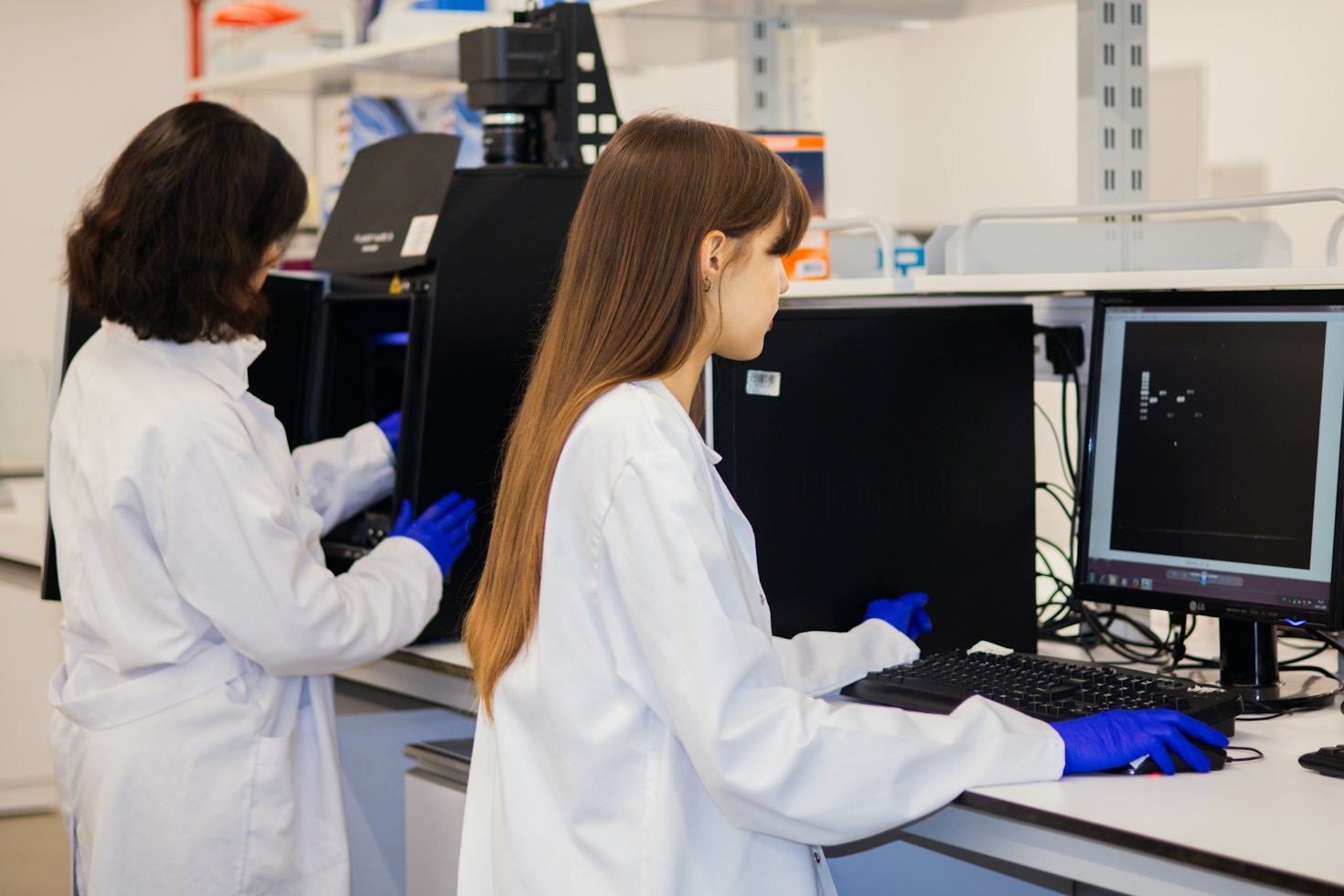
Category: Peptide Research | Reading time: 6 min | For research use only
BPC-157 is a synthetic pentadecapeptide derived from a gastric protein fragment and composed of 15 amino acids. It has been investigated predominantly in preclinical research, with experimental studies examining its biological activity across gastrointestinal, vascular, musculoskeletal, and neurological models.
Research interest in BPC-157 has grown because of the range of biological pathways explored in laboratory and animal studies. However, the evidence base remains largely preclinical, and available human data are limited.
This article provides an overview of current BPC-157 research for scientific and educational purposes. All NordBioLab products are supplied exclusively for laboratory research and are not intended for human or veterinary use.
BPC-157 Molecular Profile
- Full name: Body Protection Compound-157
- Common abbreviation: BPC-157
- Peptide length: 15 amino acids
- Sequence: Gly-Glu-Pro-Pro-Pro-Gly-Lys-Pro-Ala-Asp-Asp-Ala-Gly-Leu-Val
- Approximate molecular weight: 1419.5 g/mol
- Research form: Commonly supplied as a lyophilized peptide
BPC-157 has been described in the scientific literature as a synthetic peptide corresponding to a fragment associated with gastric proteins.
Its unusual behavior under gastric conditions has contributed to research interest, particularly in experimental models involving gastrointestinal tissues and cellular stress.
Why Is BPC-157 Studied?
BPC-157 has been investigated in a broad range of laboratory and animal models.
Much of the research focuses on biological processes associated with:
- cell migration;
- vascular signaling;
- nitric oxide pathways;
- fibroblast activity;
- extracellular matrix organization;
- gastrointestinal tissue models;
- tendon and ligament models;
- neurological signaling.
Importantly, observations in cells or animal models do not establish the same effects in humans.
The value of these studies lies primarily in understanding potential biological mechanisms and generating hypotheses for further research.
Mechanisms Studied in BPC-157 Research
Several biological pathways have been investigated in relation to BPC-157.
Angiogenesis and Vascular Signaling
Preclinical research has examined the relationship between BPC-157 and signaling pathways involved in vascular development and endothelial activity.
Studies have reported changes involving vascular endothelial growth factor (VEGF) signaling and related pathways in experimental models.
These findings have contributed to interest in BPC-157 in laboratory models involving vascularization and tissue organization.
Nitric Oxide Pathways
The nitric oxide system is another frequently investigated area of BPC-157 research.
Animal studies have examined interactions between BPC-157 and nitric oxide-related pathways involved in vascular regulation and gastrointestinal physiology.
The precise biological mechanisms remain under investigation.
Fibroblast Migration and Tendon Models
One of the better-characterized areas of BPC-157 research involves tendon fibroblasts.
Experimental work has reported changes in tendon fibroblast outgrowth, survival, and migration in BPC-157-treated models.
These findings have led researchers to investigate the peptide further in tendon, ligament, muscle, and connective-tissue models.
Cellular Signaling
Researchers have also investigated intracellular signaling pathways that may contribute to the biological responses observed in experimental models.
However, proposed mechanisms should be interpreted cautiously because much of the evidence remains mechanistic, preclinical, or model-specific.
Areas of BPC-157 Research
Gastrointestinal Research
Gastrointestinal models represent one of the longest-standing areas of BPC-157 research.
Animal studies have explored the peptide in experimental models involving gastric lesions, intestinal injury, inflammatory processes, and gastrointestinal tissue integrity.
These studies form an important part of the historical BPC-157 literature, although they do not establish clinical effectiveness in humans.
Musculoskeletal Research
BPC-157 has also been investigated extensively in preclinical musculoskeletal models.
Published studies have included experimental models involving:
- tendon injury;
- ligament injury;
- skeletal muscle injury;
- bone repair;
- tendon fibroblast activity.
Some animal studies have reported differences in histological, cellular, or functional markers between treated and control groups.
However, the overwhelming majority of this evidence comes from animal research.
Neurological Research
A smaller body of preclinical literature has investigated BPC-157 in neurological models.
Researchers have examined its relationship with dopaminergic, serotonergic, and other neurobiological pathways in experimental systems.
These findings remain exploratory and should not be interpreted as evidence of established neurological effects in humans.
Cellular and Tissue-Repair Models
BPC-157 has also been studied in laboratory models examining fibroblast migration, collagen-related processes, vascular signaling, and tissue organization.
These models can provide useful mechanistic information but do not independently demonstrate clinical outcomes.
What Does Human Research Show?
The BPC-157 evidence base remains dominated by laboratory and animal research.
Limited human observations and small pilot studies have now been reported. However, the number of participants studied is very small, study designs are generally uncontrolled, and standardized pharmaceutical formulations have not been established.
Recent reviews of the available evidence have therefore concluded that the certainty of human evidence remains very low.
There are currently no established clinical indications for BPC-157, and robust randomized clinical evidence demonstrating safety or efficacy is lacking.
For researchers, this distinction is important:
preclinical biological activity should not be assumed to translate directly into human outcomes.
BPC-157 Safety and Regulatory Considerations
BPC-157 remains an investigational compound.
Regulatory authorities have highlighted significant gaps in available human safety information, including limited data on immunogenicity, peptide-related impurities, active pharmaceutical ingredient characterization, pharmacokinetics, and long-term exposure.
These uncertainties are especially relevant when interpreting claims found outside the scientific literature.
For research purposes, BPC-157 should therefore be evaluated as an experimental peptide rather than as an established therapeutic compound.
Why Analytical Verification Matters in BPC-157 Research
The reliability of peptide research depends not only on experimental design but also on the identity and quality of the research material being studied.
Important analytical parameters can include:
- identity confirmation;
- HPLC purity;
- assay or peptide content;
- batch identification;
- analytical method;
- batch-specific documentation.
A high HPLC purity result alone does not establish peptide identity or total peptide content.
For this reason, researchers should evaluate the broader analytical documentation associated with the specific batch.
At NordBioLab, available batch-specific analytical documentation may include HPLC, LC-MS, assay, and other test results depending on the product and batch.
Researchers can review the current BPC-157 batch information and available analytical documentation on the NordBioLab BPC-157 product page.
Selected BPC-157 Research
The following publications represent examples of research relevant to BPC-157:
- Chang CH, Tsai WC, Lin MS, Hsu YH, Pang JHS. The promoting effect of pentadecapeptide BPC 157 on tendon healing involves tendon outgrowth, cell survival, and cell migration. Journal of Applied Physiology.2011;110(3):774–780.
- Sikiric P, et al. Brain-gut Axis and Pentadecapeptide BPC 157: Theoretical and Practical Implications.Current Neuropharmacology. 2018;16(10):1465–1503.
- Poolton JT, Minett J, Kazmi A. Human evidence for BPC-157 in orthopaedic and regenerative medicine: a systematic review of efficacy and safety. Acta Orthopaedica Belgica. 2026;92(3).
Researchers should review the full methodology, experimental model, study design, and limitations of individual publications rather than relying solely on summarized conclusions.
Research Considerations
BPC-157 remains an investigational peptide with no established clinical applications.
The evidence base is still dominated by in vitro and animal research. Limited human data have been reported in small uncontrolled or pilot studies, but the overall quality and certainty of this evidence remain very low.
Consequently, findings from preclinical models should not be assumed to translate directly to human outcomes.
For laboratory research, identity, purity, assay, and batch consistency are important variables. Researchers should review batch-specific analytical documentation and consider the analytical methods used to characterize the material.
BPC-157 Research Material
NordBioLab supplies BPC-157 as a lyophilized research peptide with batch-specific analytical documentation available for applicable batches.
View BPC-157 research material in the NordBioLab catalog →
Conclusion
BPC-157 is a synthetic 15-amino-acid peptide that has attracted substantial research interest across several experimental fields.
Preclinical studies have investigated its relationship with vascular signaling, nitric oxide pathways, fibroblast activity, gastrointestinal models, musculoskeletal tissues, and neurological systems.
However, laboratory and animal findings continue to make up the majority of the evidence base. Human research remains limited, and important questions regarding safety, pharmacokinetics, formulation, and clinical relevance remain unresolved.
For researchers working with BPC-157, careful evaluation of both the scientific literature and batch-specific analytical documentation is essential.
All NordBioLab products are intended exclusively for scientific and laboratory research. They are not intended for human or veterinary use. Information provided on this page is for educational and research purposes only and does not constitute medical advice.